

★ The Sweden guide ★
A little guide to Swedish candy culture.
What lördagsgodis actually is. Why Swedish candy tastes different. How the big brands got that good. Read in five minutes — taste in two days.
★ Chapter One ★
What lördagsgodis actually is.
Lördagsgodis literally means “Saturday candy.” In Sweden it's a weekly ritual: kids and adults pick a small bag from the candy counter — pick & mix, pay by weight — on Saturday, and eat it across the weekend.
It started in the 1950s as a public-health compromise: have candy if you want, but rate-limit yourself to once a week. It worked. Swedes still eat more candy per capita than almost anyone else, but the cultural framing keeps it a treat, not a habit.
It is, accidentally, the healthiest relationship anyone has invented with sweets. We didn't invent it; we ship the ingredients.
★ Chapter Two ★
Why Swedish candy tastes different.
Three reasons, in plain order. First: ingredients. EU food law restricts a lot of the synthetic-fruit-flavour shortcuts American confectionery leans on. Less corn syrup, fewer dyes, more natural fruit and licorice extracts. The result reads as “clean” on the tongue even when it's a bright pink skull.
Second: tradition. Sweden has a hundred years of small, specialised confectioners who never figured out how to be lazy. The factories make a few things and make them well. Recipes evolve slowly. Texture is taken seriously.
Third: the lördagsgodis market. Candy that has to compete on the pick-and-mix counter, where everyone picks one of each, can't coast on novelty alone. It has to actually taste good. The candy that doesn't, doesn't survive.
★ Chapter Three ★
On salmiak — the salty licorice problem.
Salmiak is licorice fortified with ammonium chloride. Yes — the chemical compound. It tastes salty, sour, alkaline, and faintly mineral. Eaten cold it's shocking. Eaten with a piece of dark chocolate it's sublime.
Half the world hates it. The Nordic half loves it. We're not going to mediate. We will say this: if you grew up with it, nothing else satisfies in the same way; if you didn't, start with a small piece, eat it slowly, drink water, give it a second piece. The third often makes a convert.
And we will say this too: a Swede who tells you they don't like salty licorice is lying, hiding, or has been bullied into denying it. The cultural relationship is too deep to opt out of.
★ The brands we love ★
The names every Swedish kitchen knows.
Founded 1992, Jönköping
BUBS
The foam-and-chew skull. The cola fizz. Almost-too-sour ovals. BUBS makes the candy other Swedish brands measure themselves against — and they do it in tiny batches with weird flavours nobody else dares.
Shop BUBS →
Founded 1862, Ljungsbro
Cloetta
The grandparent of Swedish candy. Cloetta has been making chocolate and confectionery for over 160 years and still owns the country's daily-driver favourites — Polly, Kex Choklad, Center.
Shop Cloetta →
Cloetta classic since 1937
Kex Choklad
Wafer + milk chocolate + a national obsession. The chocolate bar Swedes can identify by the rustle of the wrapper from another room.
Shop Kex Choklad →
Founded 1916, Sundbyberg
Marabou
Smooth Swedish milk chocolate that became Marabou. Tasted blind against any major European brand, it wins most of the time. Defended in court if necessary.
Shop Marabou →
Cloetta brand since 1965
Polly
Crispy puffs wrapped in chocolate. The texture is half the joy. There is no good American analogue and we won't apologise for that.
Shop Polly →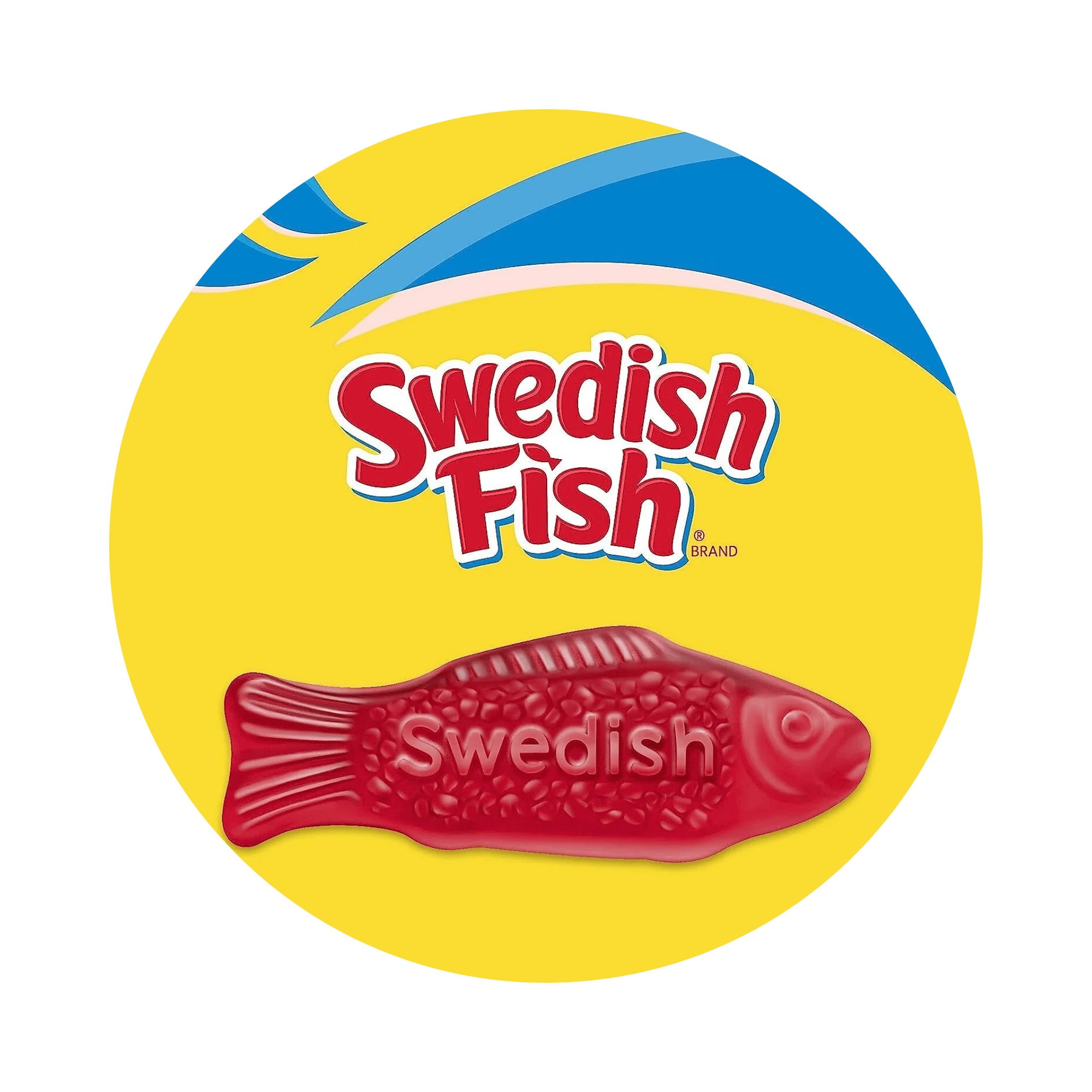
Originally Malaco · 1950s
Swedish Fish
Born in Sweden, raised by Malaco, exported to the world. The Swedish original is softer, chewier, and tastes more like raspberry than the version most Americans grew up on.
Shop Swedish Fish →