



Swedish candy
Real Swedish candy, shipped from Sweden. Duties paid, no surprise fees.




Find your shelf
Swedes sort candy by taste before anything else. Pick the one that sounds like you.
By diet
By brand
Why it tastes different
Ask anyone who has tried Swedish candy what sets it apart and the answer is usually a texture word: chewier, springier, foamier. That is not an accident. Swedish makers obsess over mouthfeel in a way that is closer to bread baking than to mainstream confectionery, and the signature construction — a chewy fruit layer over a soft foam base — barely exists outside the country.
The second difference is restraint with flavour. Raspberry tastes like raspberry. Pear is unmistakably pear. Salty liquorice does not apologise for being salty. Where other markets sweeten everything toward a common middle, Swedish candy tends to commit.
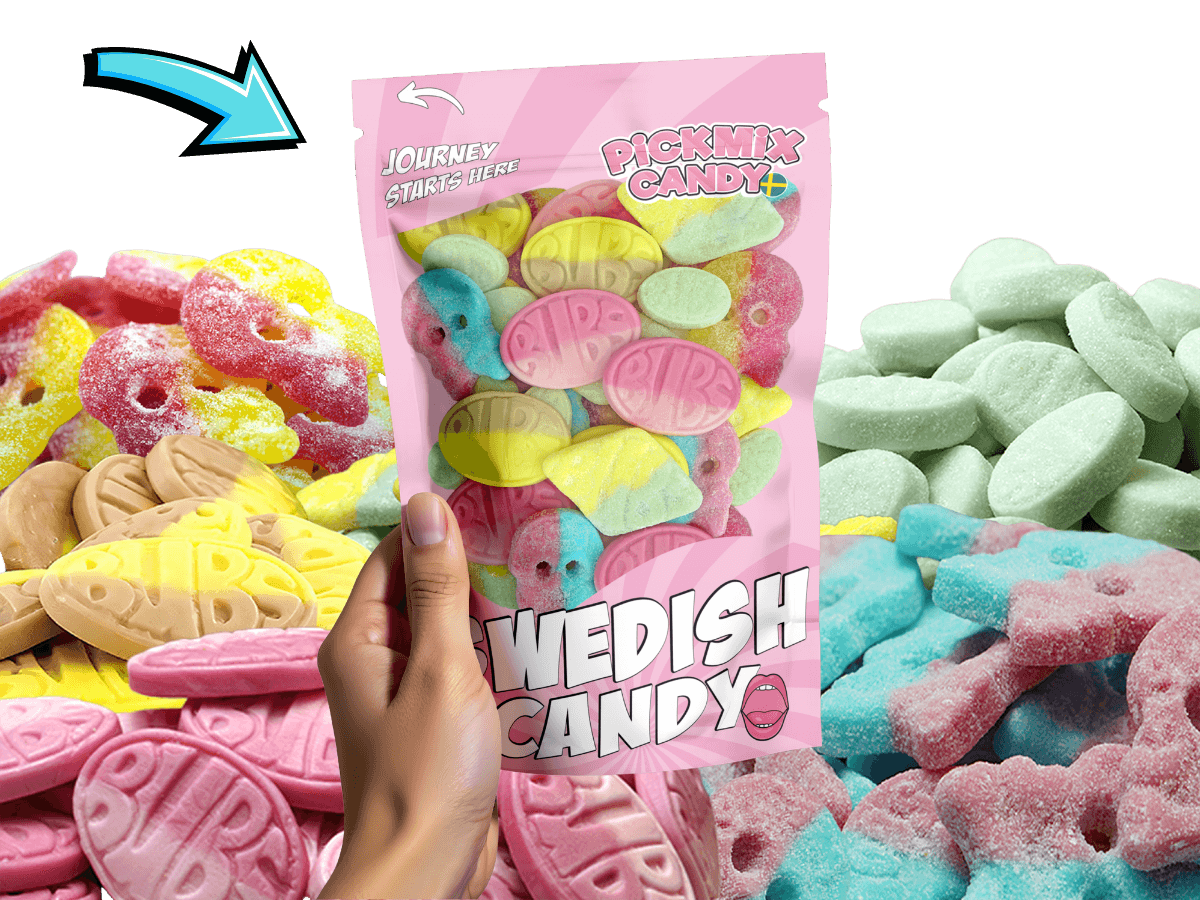
And then there are the shapes: cars, skulls, fish, frogs, ships, rats, foam pillars, salmiak coins. A Swedish candy wall looks like a slightly unhinged children's book, which is a large part of why building your own bag is the normal way to buy it.
For the long version — lördagsgodis, salty liquorice, the makers — read the Sweden guide.
Questions people ask
What is Swedish candy?
Candy made in Sweden by a handful of specialist makers — BUBS, Malaco, Cloetta, Ahlgrens, Marabou — that has evolved along its own path. The defining traits are texture and honesty of flavour: layered foam-and-chew constructions you rarely see elsewhere, and fruit flavours that taste like the fruit rather than like generic sweetness.
Why is Swedish candy different?
Sweden eats roughly double the global average of candy per person, and has done for decades. That much demand supported small factories perfecting narrow specialities — foam, salty liquorice, marshmallow cars — that larger markets never bothered with.
What is lördagsgodis?
Saturday candy. A tradition from the 1950s where candy is eaten on Saturdays rather than through the week — originally a public-health idea, now a national ritual. It rewards variety, which is why pick & mix walls are the normal way to buy candy in Sweden.
Where should a beginner start?
Sour skulls if you want the one everyone talks about, Ahlgrens Bilar if you want the one Swedes actually buy most of, and a ready-made mix if you would rather try several things than commit to a bag of one.